
🌍 Global
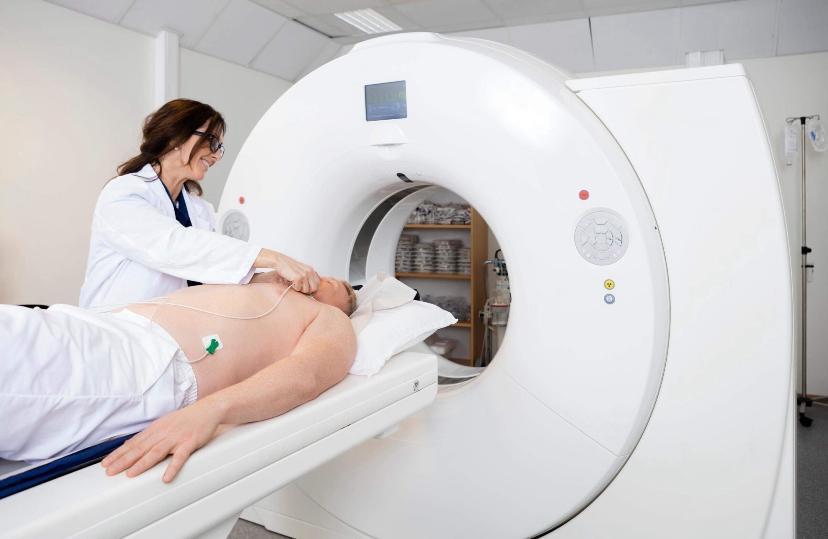






4DMedical Limited (ASX: 4DX) opened 2026 with a significant commercial win, announcing that UC San Diego Health has commenced clinical use of its CT:VQ™ technology. The update, released to the ASX on Wednesday, January 7, marks another important checkpoint in the company’s push to establish CT:VQ™ as a new standard in pulmonary imaging.
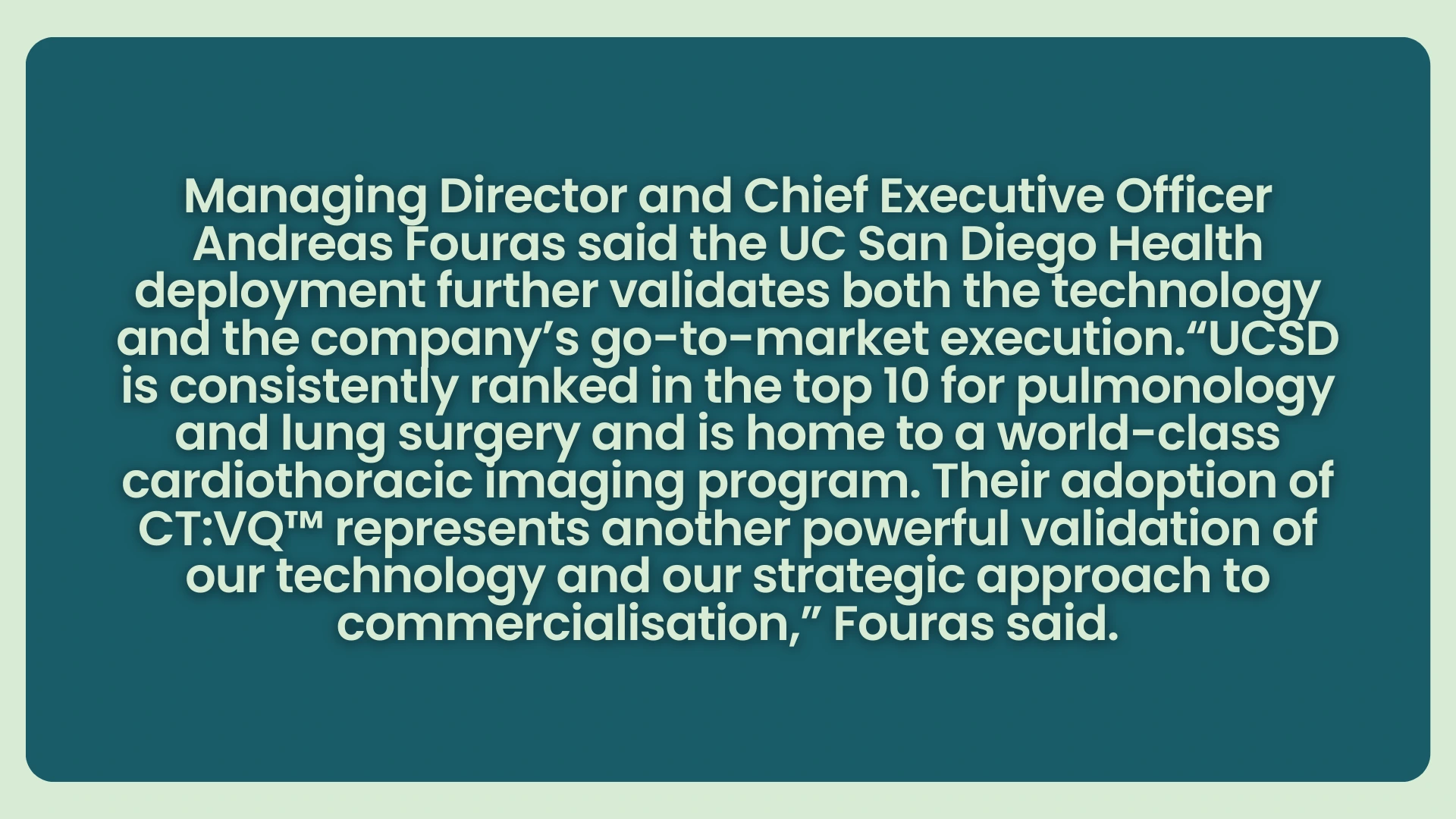
For context, UC San Diego Health is consistently ranked among the top 10 US institutions for pulmonology and lung surgery. Its decision to adopt CT:VQ™ places it alongside Stanford University, the University of Miami and Cleveland Clinic, all of which have deployed the technology since the US Food and Drug Administration granted clearance in August 2025.
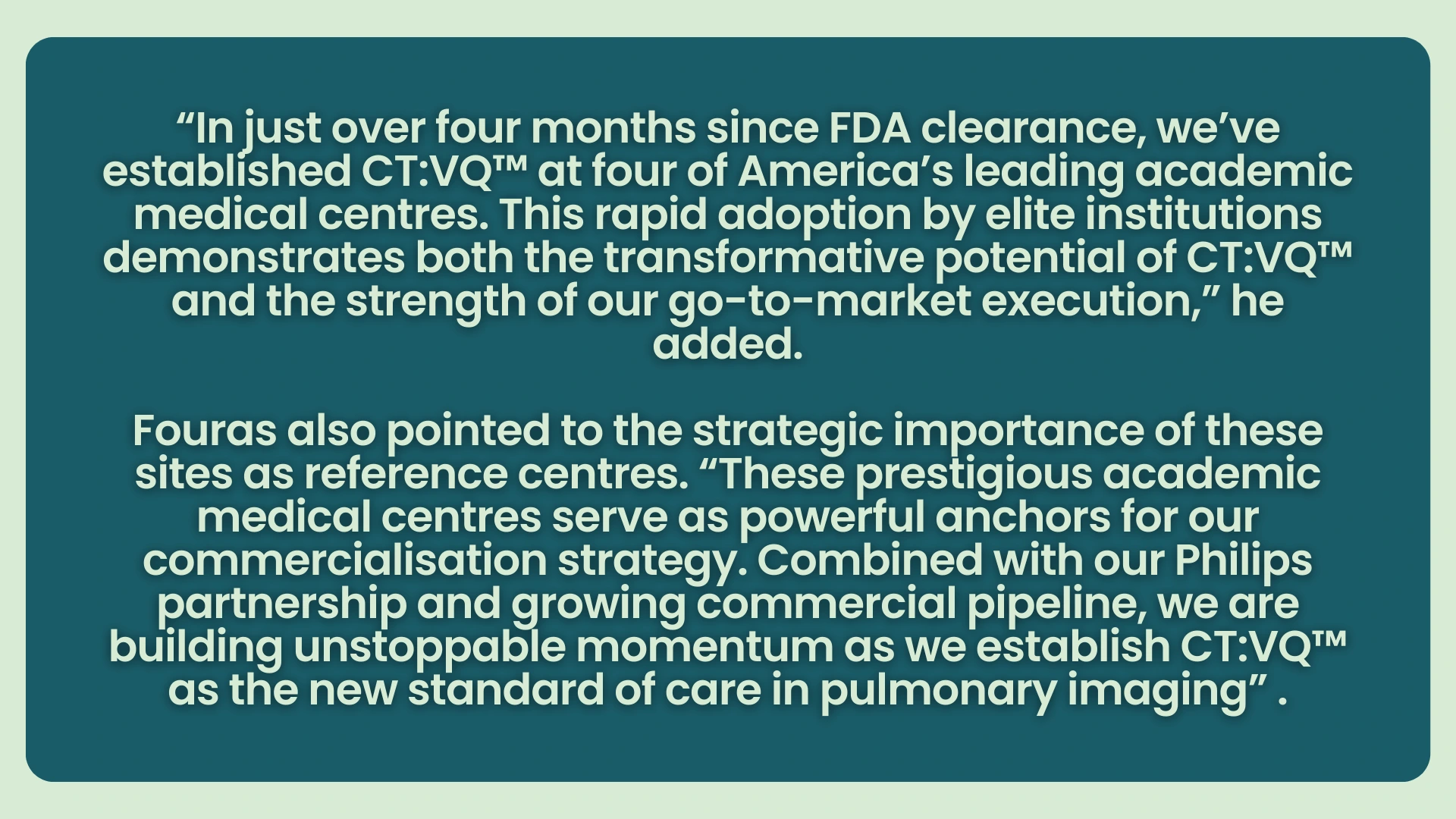
That makes four elite academic medical centres on board in just over four months, a pace that underscores how quickly 4DMedical’s technology is moving from regulatory approval into real-world clinical use.
CT:VQ™ is designed to deliver functional ventilation and perfusion insights using standard CT scans. In simpler terms, it allows clinicians to see how air and blood flow through the lungs, without relying on radioactive tracers or contrast agents traditionally used in nuclear medicine VQ scans.
This matters because ventilation-perfusion imaging plays a critical role in diagnosing and managing conditions such as pulmonary embolism, chronic obstructive pulmonary disease and other complex lung disorders. Traditional VQ scans can be time-consuming, resource intensive and dependent on nuclear medicine infrastructure. CT:VQ™ aims to streamline that process while delivering higher resolution images that integrate seamlessly into existing CT workflows.
According to the ASX announcement, UC San Diego Health has begun using CT:VQ™ under a structured commercial launch framework, with introductory pricing in place through March 31, 2026. Full commercial terms will apply thereafter, allowing clinicians time to embed the technology into routine practice before transitioning to standard pricing arrangements.
The clinical adoption at UC San Diego Health is being led by Dr Jonathan Chung, Chief of the Division of Cardiothoracic Imaging and Professor of Radiology. Dr Chung described the technology as a step change in how lung disease can be assessed.
“Radiologists are experts of anatomic imaging, but as our understanding of lung disease expands, purely structural assessment limits our diagnostic reach,” he said. “CT:VQ™ now enables functional ventilation and perfusion evaluation layered on top of traditional inspiratory and expiratory CT. This represents a significant leap forward and will allow radiologists to make diagnoses with more sensitivity and specificity”
That endorsement carries weight. As opinion leaders in cardiothoracic imaging, institutions like UC San Diego Health often influence broader clinical adoption across hospital networks, professional societies and training programs.
From a business perspective, the speed of adoption is notable. Four academic medical centre deployments in four months suggests that 4DMedical’s commercial strategy is resonating with leading hospitals that are often cautious when integrating new imaging technologies.
Source: 4DX ASX Announcement
Source: 4DX ASX Announcement
In healthcare, especially imaging, early adoption by leading academic centres can have an outsized impact. These institutions tend to publish research, train future specialists and influence clinical guidelines. As such, they often act as proving grounds for new technologies.
By securing reference sites at Stanford, Cleveland Clinic, the University of Miami and now UC San Diego Health, 4DMedical is positioning CT:VQ™ not just as a novel tool, but as a credible, scalable solution with real-world clinical validation.
The ASX announcement highlights several features that appear to be resonating with clinicians. These include the elimination of radioisotopes and contrast agents, superior image resolution compared with nuclear medicine, integration into existing CT workflows and access to reimbursement pathways that support sustainable adoption.
The market responded decisively to the update. 4DMedical shares jumped more than 14 percent intraday to trade near $4.78, with volumes exceeding 8.4 million shares by early afternoon. That move pushed the company’s market capitalisation to around $2.5 billion.
Over the past 12 months, the stock has delivered a return of more than 770 percent, reflecting growing confidence in the company’s regulatory progress, commercial execution and long-term addressable market in respiratory imaging.
While the healthcare sector can be volatile, particularly for companies transitioning from development to commercial scale-up, the consistency of recent US wins has helped underpin sentiment.
Beyond this single announcement, there are wider forces working in 4DMedical’s favour. Demand for advanced respiratory diagnostics has increased globally, driven by ageing populations, higher prevalence of chronic lung disease and greater awareness of post-viral respiratory complications.
At the same time, hospitals are under pressure to improve efficiency, reduce reliance on specialised nuclear medicine resources and adopt software-driven solutions that integrate with existing infrastructure. CT:VQ™, delivered through a software-as-a-service model, aligns well with those trends.
4DMedical’s broader portfolio, including XV Lung Ventilation Analysis Software and CT LVAS™, also positions the company across multiple points in the lung imaging workflow. The integration of artificial intelligence capabilities following the Imbio acquisition further strengthens its competitive positioning.
Looking ahead, attention will likely turn to how quickly CT:VQ™ deployments translate into recurring commercial revenue as introductory pricing periods roll off. Additional academic medical centre wins, community hospital adoption and expansion beyond flagship sites will also be key markers of scale.
For now, the UC San Diego Health adoption adds another credible endorsement to 4DMedical’s US story. It reinforces the narrative that the company is not only clearing regulatory hurdles but converting clinical interest into tangible commercial outcomes.
Disclaimer - Skrill Network is designed solely for educational and informational use. The content on this website should not be considered as investment advice or a directive. Before making any investment choices, it is crucial to carry out your own research, taking into account your individual investment objectives and personal situation. If you're considering investment decisions influenced by the information on this website, you should either seek independent financial counsel from a qualified expert or independently verify and research the information.
Tags:
RECENT POSTS
TAGS
Subscribe to the Skrill Network Newsletter today and stay informed
Recommended Articles
