
🇺🇸 USA
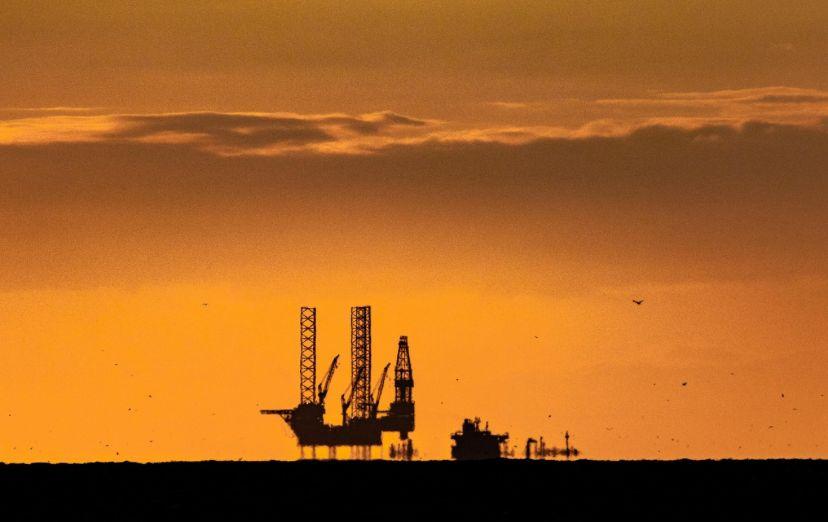






Australia’s energy sector may have just received a timely boost.
Gas producer Amplitude Energy Ltd has confirmed a promising gas discovery at its Isabella prospect offshore Victoria, raising hopes that new domestic supply could help ease tightening gas markets along Australia’s east coast.
The company reported that the Isabella ST-1 sidetrack well successfully intersected an 11 metre gas bearing interval within the Waarre C reservoir in the Otway Basin.
The update triggered renewed market interest in the stock. Amplitude shares were trading around $2.675 on the ASX on Monday afternoon, giving the company a market value of about $802 million.
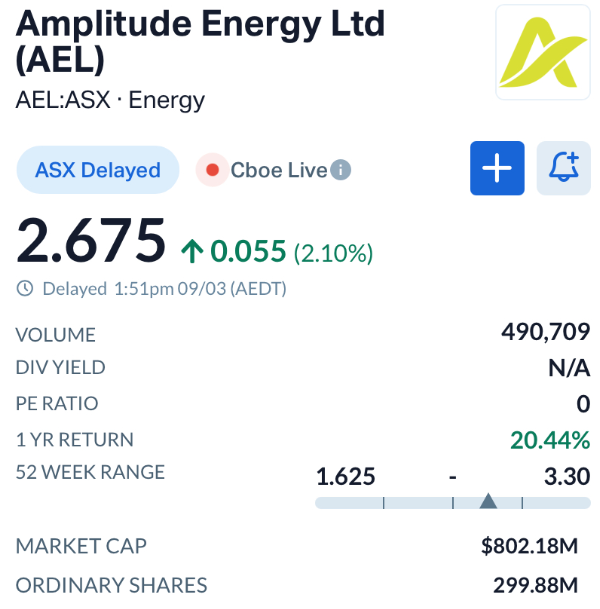
Source: MarketIndex
The discovery also carries a narrative of redemption.
Just weeks earlier, Amplitude had drilled the Elanora-1 exploration well, which failed to encounter commercial hydrocarbons. For exploration companies, dry wells are part of the business, but they can dent investor confidence.
The Isabella sidetrack appears to have restored momentum.
By intersecting gas within the Waarre formation, the well supports the company’s broader geological model for the region and reinforces the potential of the Otway Basin as a continuing source of domestic gas supply.
For Australia’s energy market, that timing matters.
Eastern Australia is facing what analysts often describe as a “structural gas shortfall” as older fields decline and demand from industry and households remains strong.
Beyond the technical details, Isabella’s location could prove just as important as the discovery itself.
The prospect sits roughly six kilometres from existing offshore pipelines and the Athena Gas Plant, which processes gas from Amplitude’s nearby operations.
That proximity means any commercial discovery could potentially be connected to existing infrastructure rather than requiring entirely new facilities.
In the energy industry this is often called a brownfield development, where companies build on established infrastructure instead of starting from scratch.
Such projects are typically cheaper and faster to develop.
If confirmed through further testing, Isabella could be tied into the Casino-Henry-Netherby pipeline network, which already delivers gas to the east coast energy market.
For now, the focus shifts to flow testing, which will determine how much gas the reservoir can actually produce and at what pressure.
This stage is critical for establishing whether the discovery can be developed commercially.
Initial analysis suggests the reservoir could deliver high gas flow rates with relatively low carbon dioxide content, estimated around 5 mol percent.
Lower CO2 content is particularly important because it reduces processing costs and simplifies the path to production.
If those early indicators hold, the Isabella discovery could become a key component of Amplitude’s broader East Coast Supply Project, which aims to deliver new domestic gas to Australian markets later this decade.
The Otway Basin has been a reliable source of gas for Australia for decades.
Fields in the region have supplied energy to homes and industries across Victoria and South Australia, supporting power generation, manufacturing and heating.
According to government energy data, gas from the basin currently supplies hundreds of thousands of households and forms a key part of the country’s domestic energy mix.
However, like many mature basins, production has gradually declined as older reservoirs become depleted.
That is why new discoveries, even relatively modest ones, can carry significant importance for energy security.
The discovery also arrives during a period of heightened attention on Australia’s gas supply.
Energy prices have become a major political and economic issue as governments balance the transition to renewable energy with the need to maintain reliable electricity and heating supplies.
Gas plays a critical role in that transition because it provides flexible power generation when renewable output fluctuates.
For that reason, projects that can bring new domestic supply online quickly are increasingly valuable.
If Isabella progresses as hoped, the field could potentially begin producing gas around 2028, adding another piece to Australia’s evolving energy puzzle.
Exploration results are always only the beginning of the story.
Further testing, engineering studies and regulatory approvals will still determine whether Isabella ultimately becomes a producing gas field.
But for Amplitude Energy and the broader Victorian energy market, the early signs are encouraging.
In a sector where discoveries can take years to materialise, even a modest gas hit can reignite hopes that the next chapter of Australia’s offshore energy story is still being written.
Source: Company updates and ASX market data, March 9, 2026.
Disclaimer - Skrill Network is designed solely for educational and informational use. The content on this website should not be considered as investment advice or a directive. Before making any investment choices, it is crucial to carry out your own research, taking into account your individual investment objectives and personal situation. If you're considering investment decisions influenced by the information on this website, you should either seek independent financial counsel from a qualified expert or independently verify and research the information.
Tags:
RECENT POSTS
TAGS
Subscribe to the Skrill Network Newsletter today and stay informed
Recommended Articles
