

ASX 200 in Red Amid Geopolitical Oil Volatility and Tough Government Tech Clampdown


Key Highlights
• ASX 200 falls 1.03% as oil volatility and tech regulation weigh on sentiment
• Brent crude rebounds above US$97.14 after fresh US military action in Iran
• Financials and technology sectors lead the market lower
• Federal anti-scam crackdown targets banks, telcos and digital platforms
• Gold miners slide sharply as bullion prices retreat
The ASX 200 slipped deeper into the red on Thursday as renewed tensions in the Middle East rattled commodity markets and a sweeping government crackdown on online scams added fresh pressure to local technology stocks.
By 12:46pm AEST, the benchmark S&P/ASX 200 had dropped 1.03% to 8,627.7 points, while the broader All Ordinaries index fell 0.99% to 8,856.8. The Australian dollar also weakened, trading at 71.24 US cents.
The downturn came despite Wall Street holding close to record highs overnight.
The Dow Jones edged 0.36% higher, while the S&P 500 barely moved. Technology stocks in the US lost momentum after weeks of AI-fuelled gains, leaving the Nasdaq almost flat.
The mood changed quickly across commodity desks after reports of a fresh US military strike inside Iran disrupted hopes of a near-term agreement around the Strait of Hormuz, one of the world’s most critical oil shipping routes.
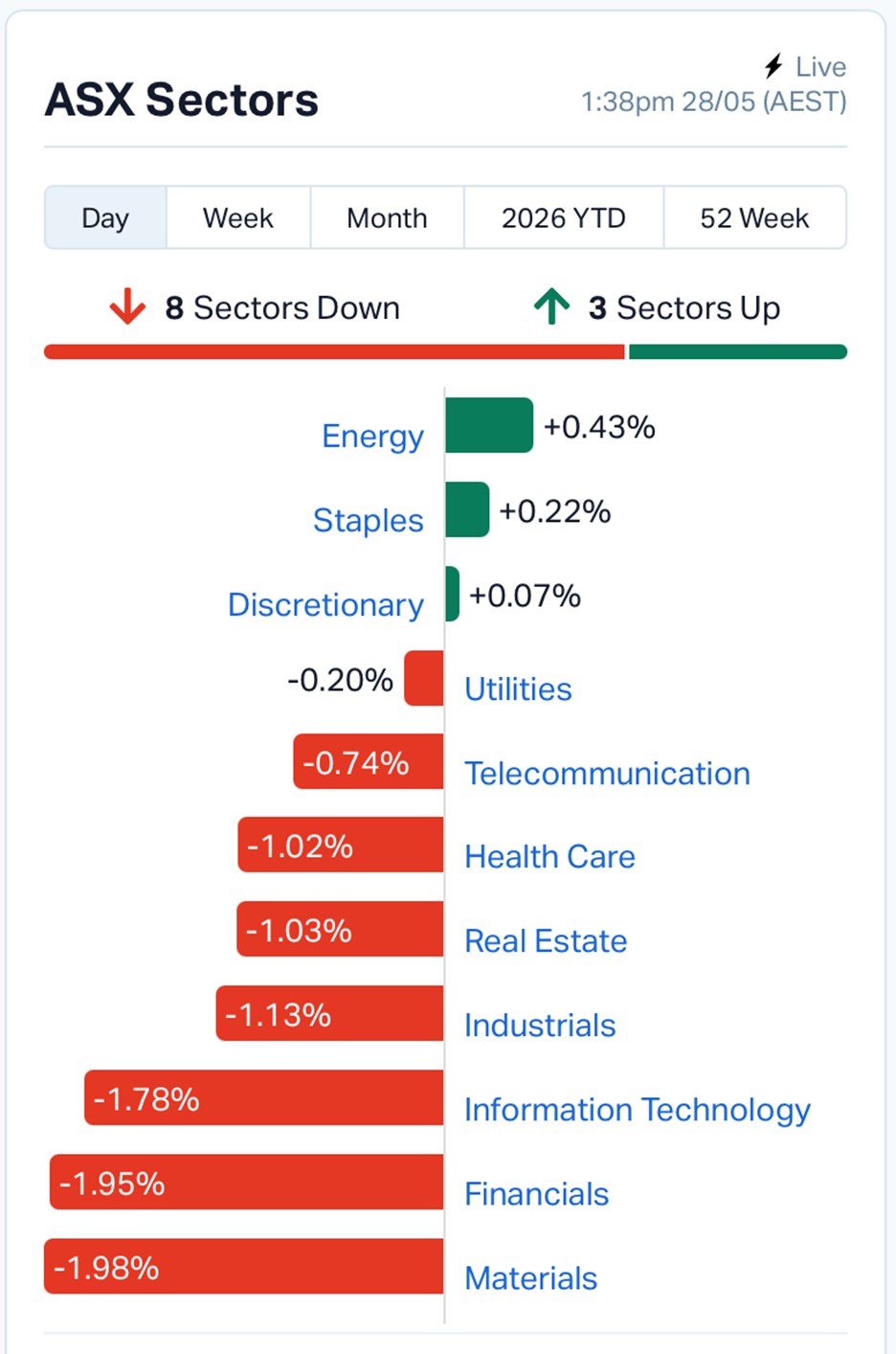
ASX: Sector Snapshot | Source: MarketIndex
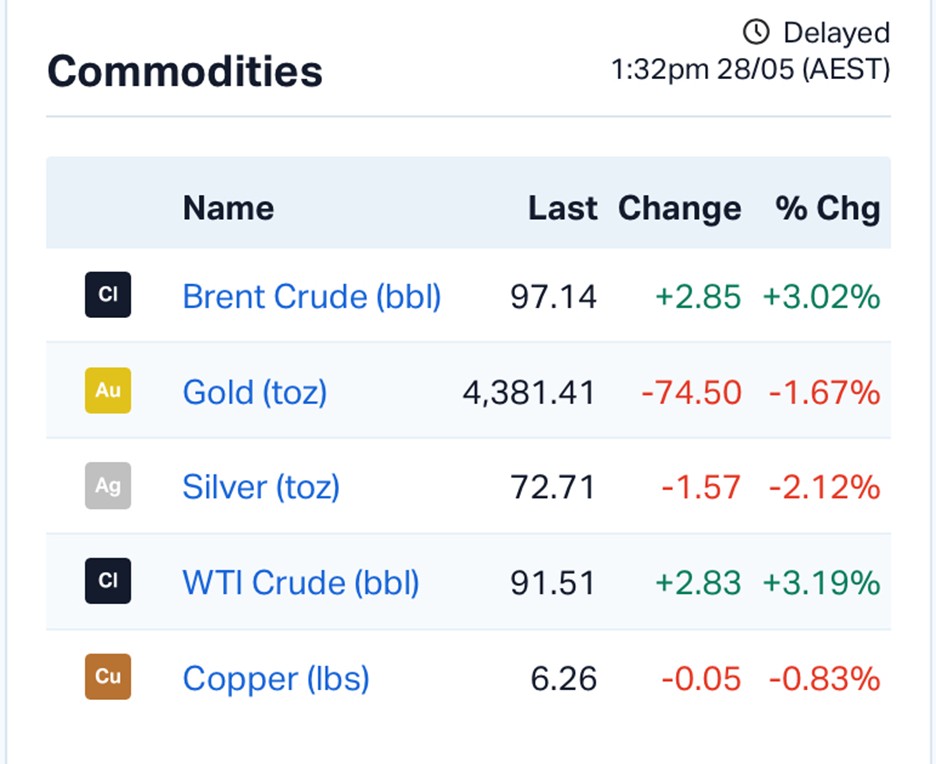
Brent crude climbed 2.85% to US$97.14 a barrel after briefly touching US$96.50 during overnight trade. Insurance costs tied to vessels moving through the strait also surged.
Commodities Snapshot| Source: MarketIndex
“Over the next two weeks, we expect either a deal for a new ceasefire, or the current ceasefire will have collapsed with active hostilities resuming,” Commonwealth Bank senior geo-economics analyst Madison Cartwright said.
“Insurance through the strait has become prohibitively expensive, and it’s unclear how and at what price insurance will be made available.”
The Strait of Hormuz handles roughly a fifth of the world’s oil trade. Even small disruptions there tend to ripple quickly into freight costs, inflation expectations and energy markets globally.
Ironically, the jump in oil prices failed to lift local energy shares.
The ASX energy sector still closed lower, reflecting broader caution across the market as traders weighed rising geopolitical risks against slowing global growth expectations.
Gold miners were hit even harder.
Spot gold fell 1.05% to US$4,408.97 an ounce, sparking a broad sell-off across the sector. The ASX All Ordinaries Gold Index dropped 4.29%, with Resolute Mining down 5.62%, Perseus Mining falling 5.58%, and Newmont retreating 5.31%.
Locally, attention also shifted toward Canberra’s latest regulatory crackdown on digital scams.
The federal government unveiled mandatory anti-scam rules targeting banks, telecommunications companies and major technology platforms, including Meta. The laws are scheduled to take effect by March 31, 2027.
Under the framework, digital platforms will be required to verify advertisers and users, monitor suspicious behaviour and rapidly remove fraudulent advertisements.
The tougher stance follows an estimated A$2.18 billion in scam-related consumer losses during 2025.
Technology stocks reacted poorly to the announcement, with the ASX Information Technology sector sliding 1.64%, making it one of the weakest performers on the day alongside Financials, which dropped 1.72%.
The banking sector also remained under pressure as markets continued reassessing the Reserve Bank’s likely path on interest rates.
Inflation data released earlier this week showed headline inflation cooling from 4.6% to 4.2%, helped largely by temporary fuel excise relief. Underlying inflation, however, remains stubbornly elevated.
IG market analyst Tony Sycamore said traders were now pricing in a softer rate outlook following weaker labour market signals.
Stay ahead of the market
The most important stories, delivered to your inbox. No noise, just what matters.
By subscribing, you agree to our Privacy Policy.
NAB chief economist Sally Auld still expects another RBA rate increase in August, potentially lifting the cash rate to 4.6%.
Away from the macro headlines, several stocks still managed strong gains.
Select Harvests surged 11.6% after releasing its half-year results, while travel and accommodation software company Siteminder jumped nearly 10%.
Lithium developer Galan Lithium climbed 8.05% after confirming wet plant commissioning had been completed at its Hombre Muerto West project in Argentina, with first processed lithium brine now flowing into evaporation ponds ahead of targeted commercial sales later this year.
The gains stood out against an otherwise broad-based retreat across the exchange, where nine of eleven sectors traded lower.
Australia Post added another reminder of persistent cost pressures building through the economy.
The postal operator confirmed domestic parcel and postage prices would rise by an average of 4.95% from July 1, citing higher long-term delivery and processing expenses despite fuel costs stabilising in recent months.
Meanwhile, the Tax Ombudsman reported a 127% surge in complaints linked to aggressive Australian Taxation Office debt collection practices between June 2025 and April 2026.
For now, markets appear caught between easing inflation hopes on one side and geopolitical instability on the other.
The ASX volatility index remains relatively subdued at 12.6, suggesting traders still expect calmer conditions over the next month.
But oil markets are telling a different story.
What is your take on this story?
Disclaimer - Skrill Network is designed solely for educational and informational use. The content on this website should not be considered as investment advice or a directive. Before making any investment choices, it is crucial to carry out your own research, taking into account your individual investment objectives and personal situation. If you're considering investment decisions influenced by the information on this website, you should either seek independent financial counsel from a qualified expert or independently verify and research the information.