

ClearVue (ASX: CPV) Secures $6M Capital Raise and Crucial European Validation

Key Highlights
- ClearVue’s Gen 3 Vision Glass passes the critical European EN 1279-5:2018 durability certification
- Proprietary power-through-glass technology validated for long-term commercial use
- Company completes a $6 million capital raise to support scaling and commercialization
- Certification confirms compatibility with standard aluminium spacer systems used globally
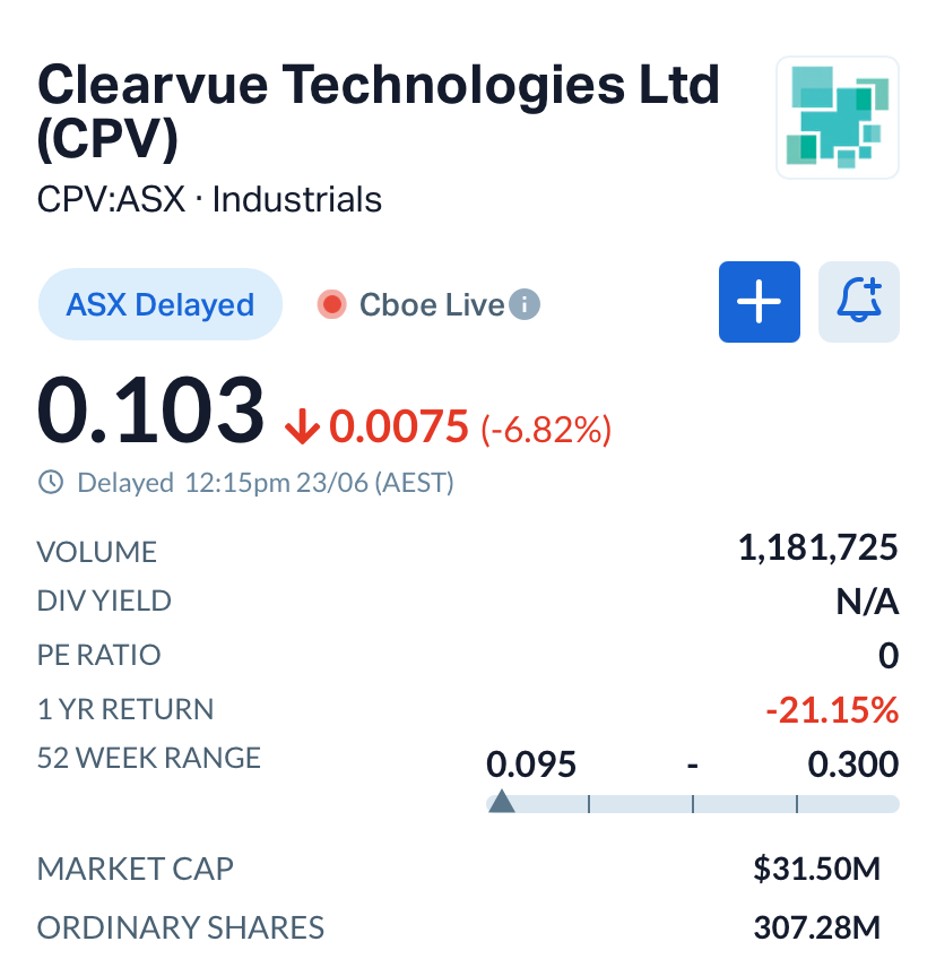
- Shares fall 6.82% to $0.103 despite positive technology milestone as capital raise weighs on sentiment
Sometimes the most important breakthroughs happen quietly.
For ClearVue Technologies (ASX: CPV), the latest milestone is not a flashy new contract or a record sales announcement. Instead, it is a technical validation that could prove far more important over the long term.
The company announced its Gen 3 Vision Glass has successfully passed EN 1279-5:2018 testing, one of Europe’s key durability standards for insulating glass units. At the same time, ClearVue completed a $6 million capital raise aimed at supporting the next phase of commercial growth.
While the market initially focused on the dilution from the raising, sending shares down 6.82% to $0.103, the certification may represent a much bigger strategic development.
Source: MarketIndex
Why this certification matters
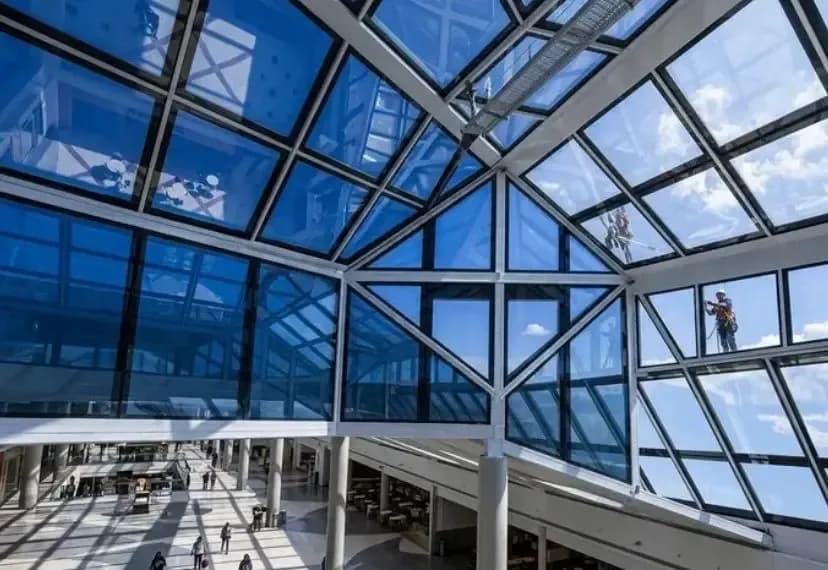
ClearVue develops building-integrated photovoltaic glass, effectively turning windows into power-generating assets.
The challenge for the industry has always been reliability.
Traditional double-glazed units are designed to remain completely sealed for decades. Introducing electrical connections into that environment creates engineering risks. Even minor moisture intrusion can damage thermal coatings, reduce efficiency and shorten product life.
ClearVue’s Gen 3 Vision Glass addresses this challenge through a patent-applied-for design that allows electrical cables to pass through the sealed glazing unit without compromising its primary moisture barrier.
Passing EN 1279-5 is significant because it demonstrates the technology can withstand accelerated aging tests designed to simulate decades of real-world environmental exposure.
In practical terms, it gives architects, facade engineers and commercial developers greater confidence that the product can perform over the long lifespan expected from modern buildings.
Building solar power into the world’s windows
The certification also validated compatibility with standard aluminium spacer systems, which are already widely used throughout the global commercial glazing industry.
That may sound like a minor detail, but it could have major commercial implications.
Many new construction technologies fail because they require manufacturers to redesign existing production lines or invest in expensive new equipment.
ClearVue’s approach is designed to fit within existing manufacturing workflows, potentially lowering adoption barriers for glass fabricators and building contractors.
As governments worldwide push for net-zero building standards and improved energy efficiency, technologies that can generate renewable power without altering building footprints are attracting increasing attention.
The global building sector accounts for roughly 30% of global energy consumption, according to the International Energy Agency, creating a significant long-term opportunity for building-integrated solar technologies.
Why the stock fell despite the good news
The share price decline highlights a common reality for small-cap technology companies.
Alongside the certification announcement, ClearVue completed a $6 million capital raising through a placement of new shares.
While fresh capital strengthens the balance sheet and reduces near-term funding risk, it also increases the number of shares on issue, diluting existing shareholders.
The market often adjusts share prices closer to placement levels following these transactions.
Profit-taking may also have contributed after the company’s trading halt and anticipation surrounding the announcement.
Management shifts focus toward commercialization
Chief Executive Officer and Managing Director Doug Hunt believes the certification represents more than a technical achievement.
Stay ahead of the market
The most important stories, delivered to your inbox. No noise, just what matters.
By subscribing, you agree to our Privacy Policy.
“Every certification we achieve is a direct outcome of how we design and manufacture our products. We design to be certified, not the other way around. These bespoke components having passed EN1279-5 standard is a meaningful step forward because it validates the key design features of our Gen 3 Vision Glass that are pivotal to easy manufacture and installation.”
He added:
“Combined with a variant of our recently certified thermal management junction box, it provides the key to the delivery of more power and lower costs to our clients. Our customers need certainty of reliability and longevity. Accelerated aging testing like this simulates decades of real world deployment and proves BIPV can be at least as reliable as standard glazing.”
Rather than focusing solely on innovation, management is increasingly emphasizing reliability, manufacturability and commercial scalability, all factors that matter deeply to large construction and infrastructure customers.
What comes next?
The certification removes a significant technical hurdle, but commercial execution remains the next challenge.
The construction industry is traditionally cautious, with long sales cycles and extensive approval processes. Winning specifications in major projects can take years.
However, with fresh capital secured and a critical European validation now achieved, ClearVue appears better positioned to pursue broader adoption of its power-generating glass technology.
For investors and industry observers alike, the story is evolving from proving the technology works to proving the market is ready to embrace it.
Source: ClearVue Technologies ASX announcement dated 23 June 2026, company filings, management commentary and EN 1279-5 certification results.
What is your take on this story?
Disclaimer - Skrill Network is designed solely for educational and informational use. The content on this website should not be considered as investment advice or a directive. Before making any investment choices, it is crucial to carry out your own research, taking into account your individual investment objectives and personal situation. If you're considering investment decisions influenced by the information on this website, you should either seek independent financial counsel from a qualified expert or independently verify and research the information.