
🌍 Global
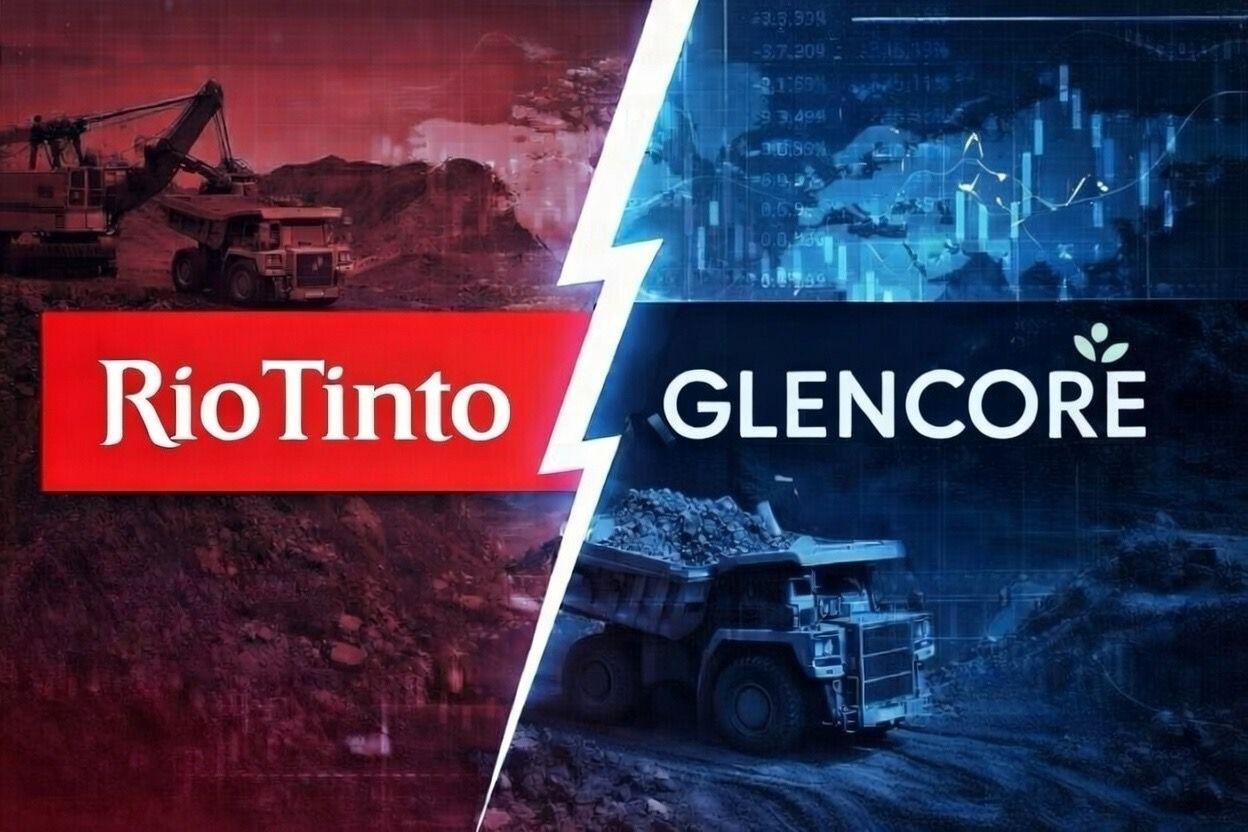






In what could have become one of the most transformative deals in global mining history, Rio Tinto and Glencore have officially ended discussions on a potential mega-merger that would have created the world’s largest mining company, with a combined market value of more than US$230 billion.
The decision follows several weeks of negotiations that ultimately failed to resolve critical issues around valuation, ownership structure and governance control. According to an official market announcement, Rio Tinto confirmed it is no longer considering a merger or other business combination with Glencore, stating that it could not reach an agreement that would deliver sufficient value to shareholders.
The collapse marks the third unsuccessful attempt over nearly two decades to combine the two mining giants, reinforcing the complexity of executing large-scale consolidation in the global resources sector.
At the heart of the failed negotiations were disagreements over how the merged company would be structured. Under the proposed framework, Rio Tinto would have retained both the chair and chief executive roles, effectively securing operational control of the combined entity. Glencore, however, reportedly argued that the proposed terms undervalued its copper assets and global trading operations and sought a larger ownership stake, estimated at around 40 percent of the combined group.
Analysts noted that these governance disagreements were not unexpected. Large mergers in the mining sector often face challenges related to corporate culture differences, leadership control and regulatory approvals across multiple jurisdictions. Jefferies analysts commented that price and governance disagreements were at the centre of the breakdown, although they added that the strategic logic behind the deal remained compelling given both companies’ exposure to key future-facing commodities such as copper.
Markets responded cautiously to the announcement. Glencore shares fell sharply in London trading following the news, while Rio Tinto’s decline was more moderate, reflecting investor expectations that negotiations had become increasingly complex in recent weeks. On the ASX, Rio Tinto shares traded around A$158.99, up 1.18 percent intraday, suggesting that investors remain comfortable with the company’s standalone strategy.
Industry analysts widely believe that investors were not fully pricing in the merger completion due to the scale of regulatory approvals that would have been required globally. A deal of this magnitude would have created the largest copper producer in the world and a dominant force across iron ore, coal and other industrial metals markets, potentially triggering antitrust scrutiny in several major jurisdictions.
Despite the breakdown, the strategic rationale for combining Rio Tinto’s large-scale mining portfolio with Glencore’s trading expertise and copper-heavy production base remains clear. Together, the companies would have controlled roughly 7 percent of global copper output, positioning the merged entity as a major supplier in the global electrification and energy transition economy.
Rio Tinto has been actively expanding its copper exposure through projects such as the Resolution Copper project in Arizona, while Glencore has also increased its strategic focus on copper as demand for electrification metals accelerates. Both companies continue to invest heavily in future-facing commodities tied to renewable energy, electric vehicles and global infrastructure development.
Analysts at RBC Capital Markets described the collapse as unsurprising given the size and complexity of the transaction, noting that “a deal of this size, and with the egos involved, was always going to be a significant challenge.” The firm added that although negotiations have ended for now, the possibility of renewed discussions in the future cannot be entirely ruled out if market conditions or strategic priorities shift.
This latest failed negotiation represents the third time the two mining companies have explored a potential combination. Earlier discussions before the global financial crisis and again in the mid-2010s also collapsed due to valuation disagreements and governance concerns. Even leadership changes over the years have not significantly altered the structural challenges involved in combining the two firms.
While both companies declined to provide detailed commentary beyond their official statements, industry observers say the collapse reflects a broader trend in the mining sector where mega-mergers are becoming increasingly difficult to execute. Regulatory complexity, geopolitical considerations, commodity price cycles and national resource sensitivities all play a growing role in shaping consolidation decisions.
The termination of merger talks is likely to shift market focus back toward organic growth strategies and targeted acquisitions rather than transformational mega-deals. For Rio Tinto, the emphasis remains on expanding production in iron ore while strengthening its portfolio in copper, lithium and other future-focused minerals. Glencore, meanwhile, continues to leverage its trading business alongside mining operations to maintain strong cash generation and commodity market influence.
From an industry perspective, the episode highlights how consolidation ambitions in mining are increasingly constrained by governance expectations, shareholder return requirements and regulatory hurdles. Even when strategic synergies are clear, execution risks can outweigh potential benefits.
With merger discussions now officially closed, both companies are expected to refocus on their individual capital allocation strategies and project pipelines. Analysts believe Rio Tinto will continue prioritising disciplined investment decisions aimed at long-term shareholder returns, while Glencore is likely to maintain its expansion strategy in copper and battery-related metals.
Although the highly anticipated “merger of the decade” has not materialised, the negotiations themselves underline the strategic importance of consolidation discussions in a world increasingly driven by competition for critical minerals. For now, however, the global mining landscape remains unchanged, with the industry’s biggest players continuing to compete independently rather than under a single corporate banner.
Disclaimer - Skrill Network is designed solely for educational and informational use. The content on this website should not be considered as investment advice or a directive. Before making any investment choices, it is crucial to carry out your own research, taking into account your individual investment objectives and personal situation. If you're considering investment decisions influenced by the information on this website, you should either seek independent financial counsel from a qualified expert or independently verify and research the information.
Tags:
RECENT POSTS
TAGS
Subscribe to the Skrill Network Newsletter today and stay informed
Recommended Articles
