


Silex Systems Secures $99M US Backing as Nuclear Tech Gains Momentum

Team Skrill Network
Team Skrill Network comprises seasoned professionals from diverse fields including Finance, Mining, Technology, Investing, and Digital Strategy. They bring a deep knowledge and understanding of financial markets and behavioural patterns to every story, ensuring credibility and precision in every piece. Whether analysing emerging market trends or spotlighting small- and mid-cap growth companies across ASX, TSX, or NASDAQ, the team’s editorial approach blends data-driven insights with compelling storytelling. Their expertise enables them to process complex developments into content that resonates with both institutional investors and retail audiences. Backed by experience in content curation, SEO strategy, and investor-focused messaging, the team of writers at Skrill Network are committed to delivering stories that matter—authentic, relevant, and strategically aligned with the evolving landscape of global investing.
Read more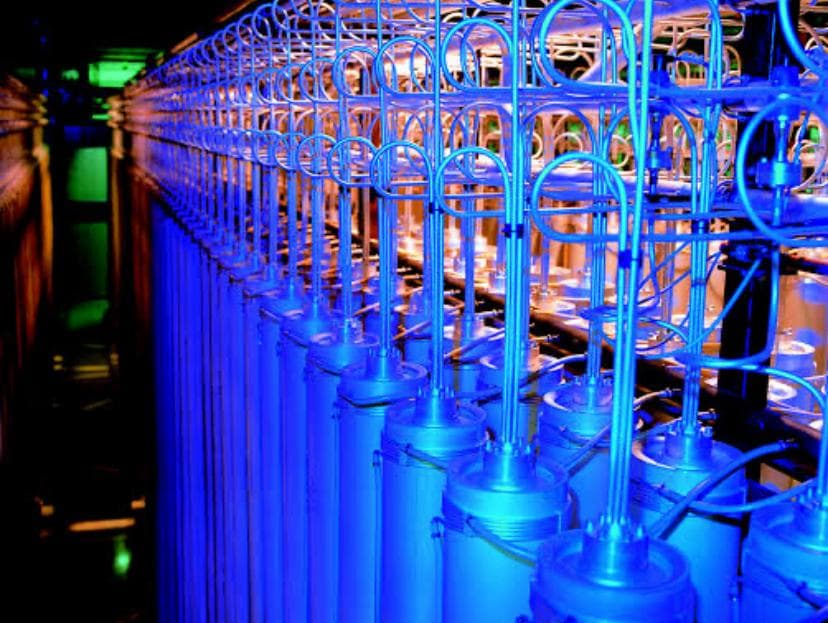
Key Highlights:
- Silex Systems Limited gains US$98.9M in incentives for uranium enrichment project
- Additional US$28.5M support from the US Department of Energy
- Paducah project targets first production by 2030
- Laser enrichment technology positioned as more efficient than traditional methods
- Shares of Silex Systems Ltd (ASX: SLX) trading at $5.23
A nuclear bet in an energy-hungry world
Silex Systems Limited has secured a major financial boost from the United States, locking in up to US$98.9 million in incentives for its next-generation uranium enrichment project. The funding, tied to performance targets in Kentucky, adds to a broader US-backed package aimed at reshaping the nuclear fuel supply chain.
Overnight, global markets have remained sensitive to energy shocks and geopolitical tensions. Against that backdrop, nuclear energy is once again being framed as a long-term solution to energy security.
The deal: breaking down the $127 million package
At the centre of the announcement is Global Laser Enrichment, the joint venture commercialising Silex’s proprietary technology.
Market Snapshot
The numbers are substantial:
- US$98.9 million in state and local incentives from Kentucky and McCracken County
- Up to US$28.5 million in federal funding from the US Department of Energy
Combined, the package totals roughly US$127.4 million, offering largely non-dilutive funding for the project.
For a company of Silex’s scale, this is not just financial support. It is a validation of its technology and strategic importance.
The project: Paducah and the nuclear supply chain reset
The funding is directed toward the Paducah Laser Enrichment Facility, a 700-acre site in Kentucky designed to become the world’s first commercial laser-based uranium enrichment plant.
The goal is straightforward but significant.
Instead of mining fresh uranium, the facility will reprocess existing depleted uranium stockpiles held by the US government. This converts what was once considered waste into usable nuclear fuel.
If successful, the project could play a key role in rebuilding domestic US nuclear capability, reducing reliance on foreign enrichment sources, particularly Russia.
CEO perspective: a long-term transformation
Silex Managing Director and CEO Michael Goldsworthy framed the project as a structural shift rather than a short-term opportunity.
He said, “We are greatly appreciative of the support for GLE’s PLEF from the Commonwealth of Kentucky and McCracken County. With an advanced Nuclear Regulatory Commission licensing effort underway, ongoing focus on technology and manufacturing maturation programs and full-scale preliminary detailed design for the PLEF, we welcome the support from US federal, state, and local partners as we progress towards the commercial deployment of the world’s first laser-based uranium enrichment plant.”
The emphasis is clear. This is not just about funding. It is about moving closer to commercial reality.
Why this matters: the nuclear renaissance narrative
The timing of the announcement is not coincidental.
Globally, energy markets remain under pressure. Oil price volatility, supply disruptions, and the push for decarbonisation are forcing governments to rethink long-term energy strategies.
Nuclear energy, once sidelined in many markets, is returning to the conversation.
Silex’s technology sits at the intersection of that shift.
1. Efficiency advantage
The SILEX laser enrichment method is described as a third-generation technology, potentially more efficient than traditional centrifuge systems.
In simple terms, it could produce nuclear fuel using less energy and at lower cost.
2. Strategic independence
For the United States, the project is about more than energy. It is about control.
Rebuilding a domestic uranium supply chain reduces reliance on geopolitical rivals and strengthens national security.
3. Future-ready fuel
The facility is also designed to produce HALEU, or High-Assay Low-Enriched Uranium, which is essential for next-generation nuclear reactors, including small modular reactors.
Progress update: from concept to commercial pathway
The project is currently classified at TRL-7 and MRL-7, meaning it has moved beyond theory into real-world demonstration.
That places it in the late-stage development phase, with commercial deployment targeted around 2030.
Silex and its partners have already committed around US$600 million in engineering, design, and licensing efforts, indicating long-term commitment rather than speculative intent.
Market reaction and stock context
Shares of Silex Systems Ltd (ASX: SLX) were trading around $5.23 in afternoon trade on March 27, 2026, down slightly on the day but still up over 36 percent over the past year.
Stay ahead of the market
The most important stories, delivered to your inbox. No noise, just what matters.
By subscribing, you agree to our Privacy Policy.
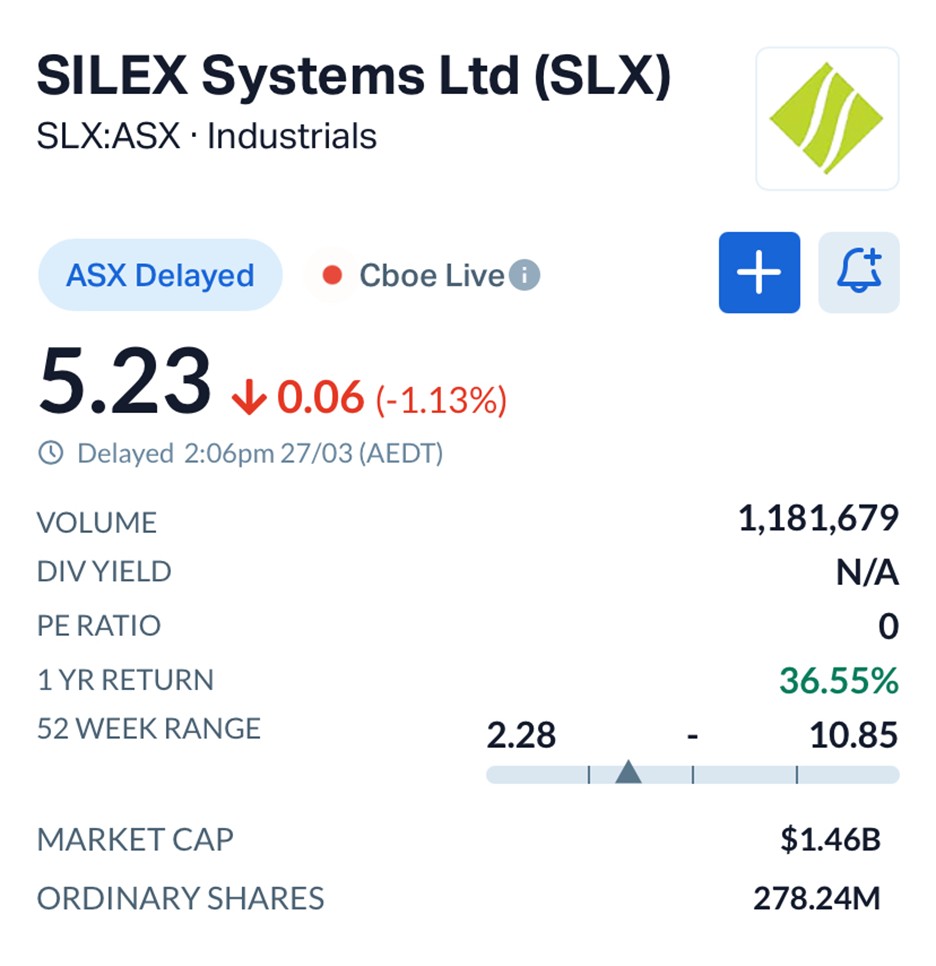
Source: MarketIndex
The muted reaction suggests the market may already be pricing in some of the long-term potential, while remaining cautious about execution risks.
The risks: what could go wrong
Despite the optimism, several hurdles remain.
- Regulatory approvals from the Nuclear Regulatory Commission are still required
- Commercial viability depends on uranium market conditions
- Technology must successfully transition from demonstration to large-scale production
- Geopolitical and policy shifts could alter funding or demand dynamics
Silex itself acknowledges that the commercial future of its technology remains uncertain and subject to multiple variables.
The bigger picture: energy, geopolitics, and capital
This announcement reflects a broader shift in global capital flows.
Governments are no longer passive observers in critical industries. They are active participants, directing funding toward technologies that align with national priorities.
In that context, Silex is not just a small-cap technology company. It is becoming part of a much larger geopolitical narrative around energy security.
Silex Systems’ US funding win marks a significant milestone in its journey from technology developer to potential nuclear fuel supplier.
While the road to commercialisation remains long, the backing from US federal and state agencies signals growing confidence in both the technology and its strategic importance.
What is your take on this story?
This is user sentiment & not financial advice.
Disclaimer - Skrill Network is designed solely for educational and informational use. The content on this website should not be considered as investment advice or a directive. Before making any investment choices, it is crucial to carry out your own research, taking into account your individual investment objectives and personal situation. If you're considering investment decisions influenced by the information on this website, you should either seek independent financial counsel from a qualified expert or independently verify and research the information.