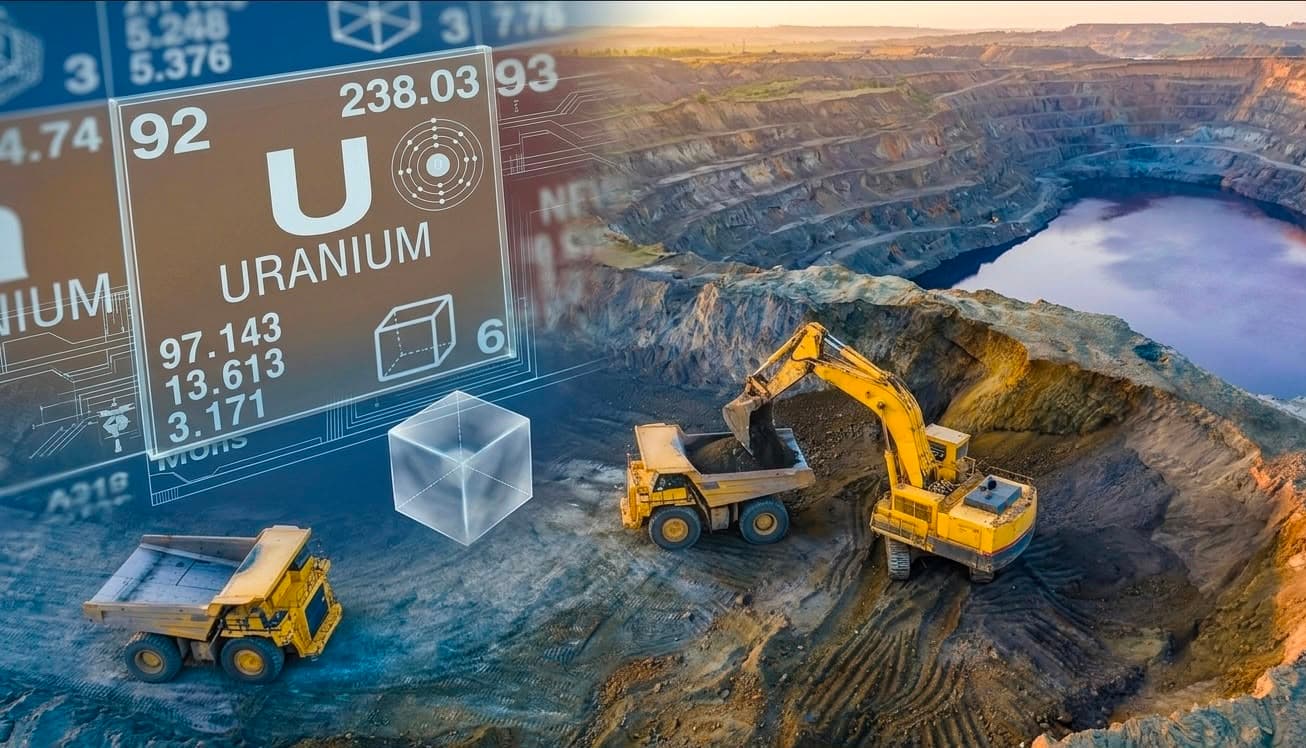


War, Oil and the ASX: Markets Slide as Middle East Conflict Sparks Energy Shock

Key Highlights:
- S&P/ASX 200 falls 1.22% to 8,831.4 as geopolitical tensions rise
- Oil prices surge as the Strait of Hormuz disruption threatens global supply
- Technology stocks rally 3.16%, defying broader market weakness
- Mining and gold sectors lead losses, falling over 3–4%
- Wall Street declines overnight amid rising energy and inflation concerns
The Australian share market is ending the week under pressure as escalating tensions in the Middle East ripple through global financial markets, triggering sharp sector swings across the S&P/ASX 200.
By early afternoon on Friday, the benchmark index had fallen 1.22 percent to 8,831.4 points, marking its lowest level in nearly a month and extending a four day losing streak.
What began earlier in the week as cautious profit taking has now turned into a broader market reset. The trigger is the rapidly intensifying conflict involving Israel, the United States and Iran, which has pushed oil markets into turmoil and forced investors globally to reassess risk.
Source: MarketIndex
A geopolitical shock reverberates through markets
The current sell off is rooted in a sudden energy supply shock.
The Strait of Hormuz, a narrow shipping channel connecting the Persian Gulf to global oil markets, handles roughly 20 percent of the world’s crude exports, according to the International Energy Agency.
With tanker traffic disrupted amid rising military activity, energy traders are bracing for a prolonged supply squeeze.
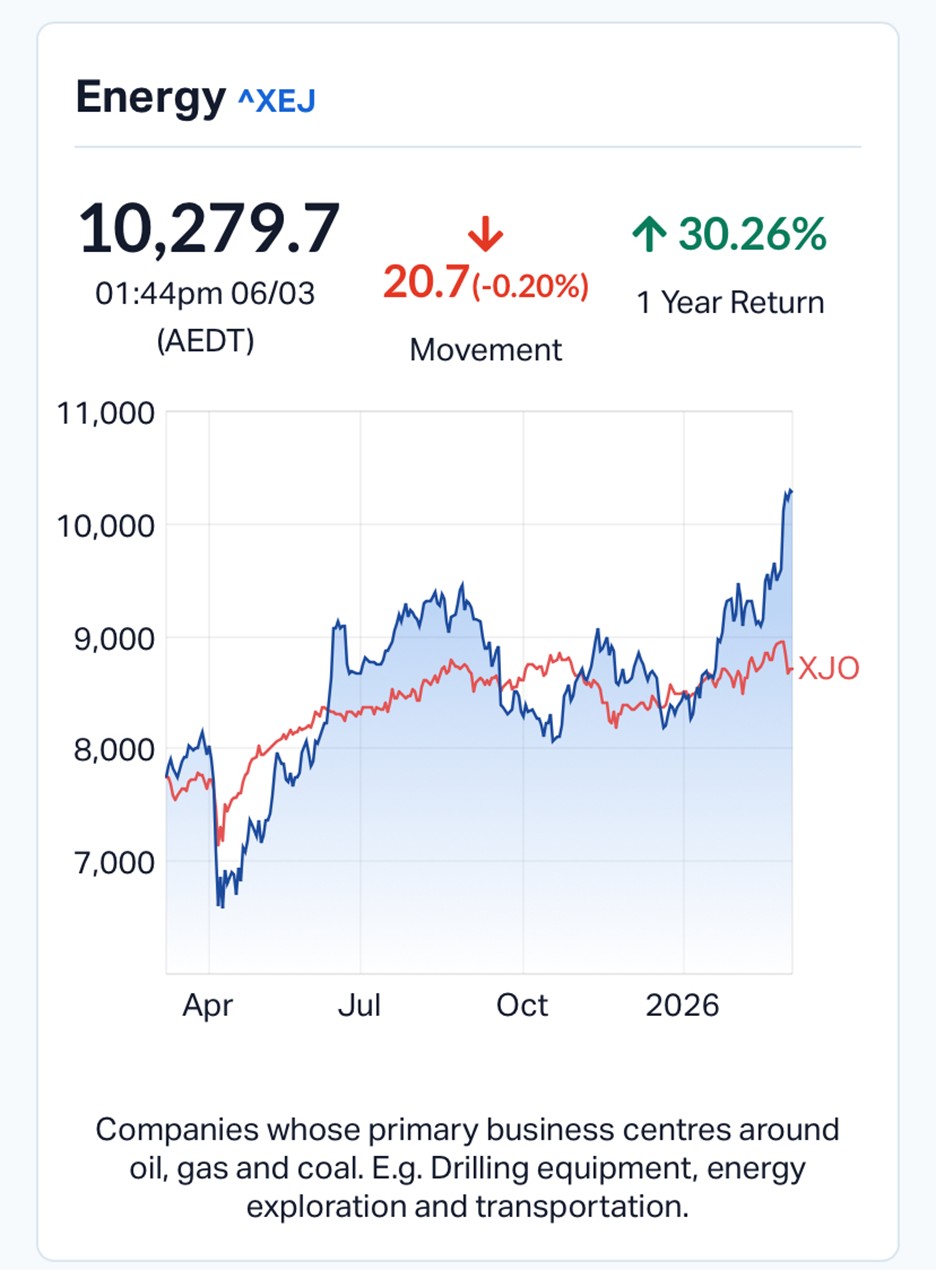
Oil markets reacted immediately. Brent crude surged nearly 17 percent since late February, recently trading around US$84 per barrel, while US benchmark WTI crude hovered near US$79.
Source: MarketIndex
The ripple effects of this price surge are already showing up across global markets.
Higher oil prices tend to push up transport and manufacturing costs, which in turn can reignite inflation pressures. For equity markets, that combination often translates into lower valuations and heightened volatility.
Wall Street sets the tone overnight
Australian shares followed a weaker lead from Wall Street, where investors spent the previous session de risking portfolios.
The Dow Jones Industrial Average dropped more than 780 points, or 1.61 percent, while the S&P 500 slipped 0.56 percent. The technology heavy Nasdaq Composite fell a milder 0.26 percent.
Despite the broader decline, one notable exception was semiconductor giant Broadcom, which climbed after forecasting that its artificial intelligence chips could generate US$100 billion in annual revenue by 2027.
That outlook reinforced a theme dominating global markets this year. Even during geopolitical turmoil, the artificial intelligence boom continues to attract capital.
A surprising divide emerges on the ASX
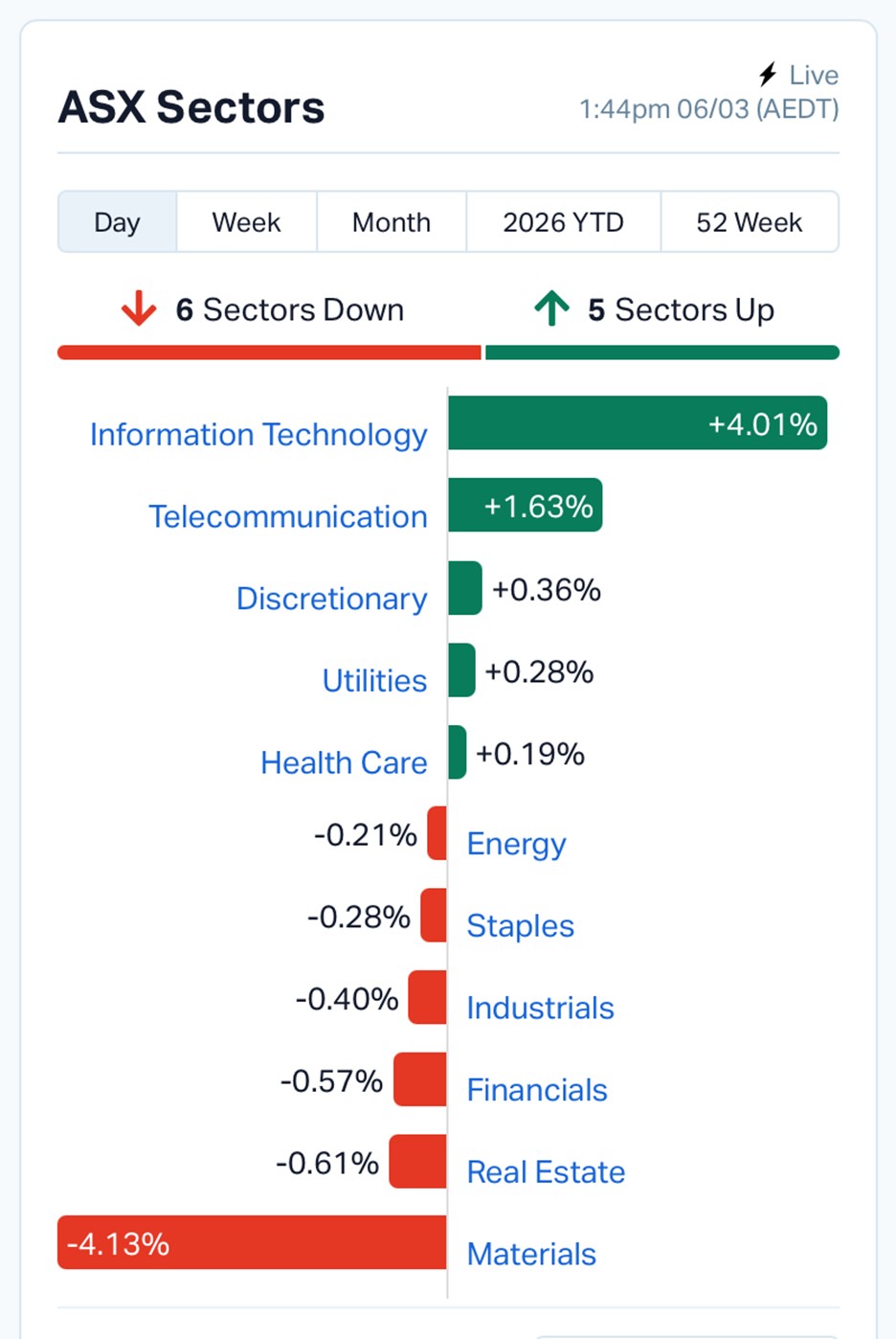
While the overall Australian market declined, sector performance told a more complex story.
Technology stocks emerged as the unlikely winners.
The S&P/ASX All Technology Index climbed 3.16 percent to 2,879.2 points, staging one of its strongest sessions of the year.
Several technology companies led the charge:
- Pro Medicus surged 9.07 percent to $132.51
- SiteMinder jumped 12.26 percent
- WiseTech Global rose 6.94 percent
Market analysts suggest part of this rally may be driven by short covering. After falling heavily earlier this year, technology stocks had already priced in significant pessimism.
When geopolitical events trigger broad selling elsewhere, beaten down sectors can sometimes stage powerful rebounds.
Miners bear the brunt of the sell off
If technology found a lifeline, the same could not be said for Australia’s mining sector.
The ASX 200 Resources Index dropped 3.72 percent, making it the weakest segment of the market.
Gold producers were hit particularly hard, with the ASX Gold Index sliding 4.81 percent.
Among the major decliners:
- Deep Yellow fell 9.76 percent
- Catalyst Metals dropped 10.45 percent
- Viridis Mining and Minerals declined 9.57 percent
The weakness in mining stocks reflects a double pressure.
On one side, rising oil prices increase operational costs for miners. On the other, concerns about slowing global growth, particularly in China, are weighing on commodity demand.
Earlier this week, Beijing announced its lowest economic growth target since 1991, forecasting expansion of between 4.5 and 5 percent for the year.
Given China’s role as the world’s largest consumer of iron ore and many industrial metals, the announcement raised fresh concerns for Australia’s export heavy resources sector.
The gold puzzle
One of the more puzzling market moves this week has been the behaviour of gold.
Traditionally seen as a safe haven during geopolitical crises, the precious metal has struggled to maintain momentum.
Part of the explanation lies in what market strategists call a correlated sell off.
When institutional investors face margin calls on declining equity positions, they often sell profitable holdings to raise cash. Assets such as gold or cryptocurrencies can therefore fall temporarily even during periods of heightened uncertainty.
For some traders the logic becomes simple. In a world facing a potential energy shortage, oil and fuel supply may matter more immediately than safe haven assets.
Stay ahead of the market
The most important stories, delivered to your inbox. No noise, just what matters.
By subscribing, you agree to our Privacy Policy.
Broader economic signals offer mixed picture
Despite the turbulence in financial markets, Australia’s underlying economic data remains relatively resilient.
The Australian Bureau of Statistics recently reported that employment reached 15 million people in December, with nearly 100,000 jobs added during the final quarter of 2025.
Farmers recorded the highest average working hours during the period, helped by a strong spring harvest season.
Meanwhile, corporate governance issues continue to dominate headlines.
A Federal Court ruling this week found former executives of Star Entertainment Group breached their duties over anti money laundering failures, highlighting increasing regulatory scrutiny on corporate accountability.
Volatility rising but panic absent
Despite the sharp market movements, volatility indicators suggest investors are not yet expecting a full scale financial crisis.
The S&P/ASX 200 VIX Index, which measures expected market volatility over the next 30 days, is currently sitting around 15.3.
That level indicates normal volatility rather than panic selling.
In other words, the market is repricing geopolitical risk rather than collapsing outright.
The road ahead
For now, the trajectory of global markets may depend less on economic data and more on developments in the Middle East.
If the Strait of Hormuz disruption continues, energy prices could remain elevated and inflation risks may re emerge.
On the other hand, a diplomatic breakthrough could quickly restore confidence and trigger a relief rally.
Until then, the Australian share market appears locked in a period of heightened uncertainty.
For traders and long term investors alike, the message from this week’s market moves is clear. In an interconnected global economy, geopolitics can still reshape financial markets overnight.
Source: ASX market data, global commodity prices, International Energy Agency, Australian Bureau of Statistics.
What is your take on this story?
Disclaimer - Skrill Network is designed solely for educational and informational use. The content on this website should not be considered as investment advice or a directive. Before making any investment choices, it is crucial to carry out your own research, taking into account your individual investment objectives and personal situation. If you're considering investment decisions influenced by the information on this website, you should either seek independent financial counsel from a qualified expert or independently verify and research the information.