

Why Pepper Money Walked Away from Challenger’s $2.25 Billion Play

Team Skrill Network
Team Skrill Network comprises seasoned professionals from diverse fields including Finance, Mining, Technology, Investing, and Digital Strategy. They bring a deep knowledge and understanding of financial markets and behavioural patterns to every story, ensuring credibility and precision in every piece. Whether analysing emerging market trends or spotlighting small- and mid-cap growth companies across ASX, TSX, or NASDAQ, the team’s editorial approach blends data-driven insights with compelling storytelling. Their expertise enables them to process complex developments into content that resonates with both institutional investors and retail audiences. Backed by experience in content curation, SEO strategy, and investor-focused messaging, the team of writers at Skrill Network are committed to delivering stories that matter—authentic, relevant, and strategically aligned with the evolving landscape of global investing.
Read more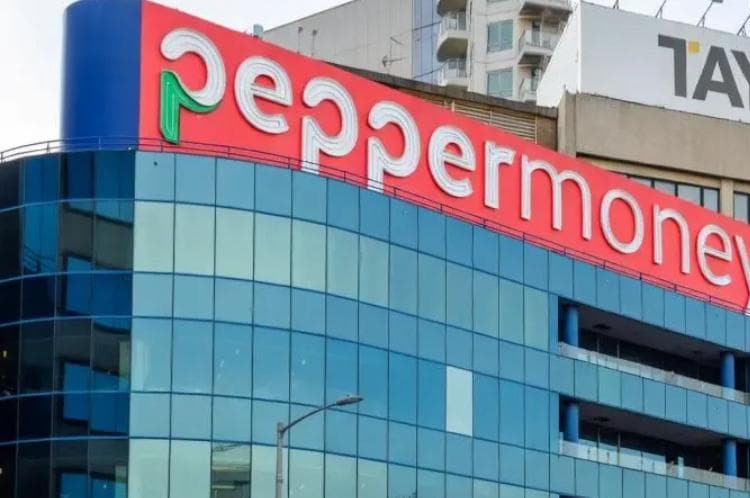
Key Highlights:
- Pepper Money (ASX: PPM) rejects Challenger’s $2.25 per share “final” offer
- Shares rise 3.13% to $1.73 as market backs independence
- Loan originations jump 34%, strengthening Pepper’s bargaining power
- Challenger (ASX: CGF) pivots to $150M share buyback post-rejection
- Board cites deal “not reasonably capable of execution”
This week, Pepper Money Limited (ASX: PPM) walked away from what was labelled a “best and final” offer from Challenger Limited (ASX: CGF), abruptly ending discussions that could have reshaped Australia’s non-bank lending landscape.
On paper, the offer stood at $2.25 per share, implying a multi-billion-dollar transaction. In reality, the breakdown reveals a clash of timing, confidence, and execution risk.
A deal that looked done… until it wasn’t
Challenger’s revised proposal was positioned as its final attempt to acquire Pepper Money, in partnership with Pepper Group ANZ HoldCo.
Market Snapshot
But after reviewing the proposal and consulting shareholders, Pepper’s Independent Board Committee delivered a decisive verdict:
The deal was “not reasonably capable of execution.”
That phrase, often buried in corporate language, is where the real story lies.
The confidence gap: Pepper’s growth changes the equation
At the heart of the rejection is momentum.
Pepper Money used the announcement to highlight strong underlying performance:
- Applications up 21% compared to early 2025
- Loan originations up 34% year-on-year
- Continued strength across mortgages and asset finance
This creates a classic M&A tension. Deals are often negotiated based on past performance, but Pepper’s current trajectory suggests a higher future valuation.
Selling at $2.25 may have made sense months ago. Today, the board appears to believe it undervalues the company’s growth potential.
Execution risk: the deal behind the deal
Beyond price, structure became a sticking point.
The proposed acquisition was not a straightforward takeover. It involved a joint structure with Pepper’s existing parent entity, adding layers of complexity.
In M&A, complexity equals risk.
Regulatory approvals, legal structuring, and shareholder alignment all introduce uncertainty. If a deal is seen as too complicated or fragile, boards often step back, even if the headline price looks attractive.
Pepper’s wording suggests exactly that.
The issue was not just value. It was whether the deal could realistically close.
Shareholder influence: the silent dealmakers
Pepper confirmed it consulted shareholders before making its decision.
This is critical.
Large institutional investors often determine the fate of such transactions. If key shareholders signal resistance, the probability of approval drops sharply.
While no specific names were disclosed, the implication is clear:
The offer likely failed to secure enough backing from major holders.
In modern markets, boards rarely push forward with deals that lack investor support.
Capital return sends a message
Pepper reinforced its position with a tangible signal.
The company confirmed a 7.8 cent fully franked dividend, payable on April 14, 2026.
This is more than a routine update. It is a statement.
By returning capital to shareholders, Pepper is effectively saying it does not need a takeover to deliver value.
At current levels, the stock also carries a dividend yield above 15%, underscoring its income appeal in a high-rate environment.
Challenger’s pivot: from acquisition to buyback
For Challenger, the rejection prompted a swift change in strategy.
The company announced it will proceed with a $150 million on-market share buyback, having already secured regulatory approvals.
CEO Nick Hamilton struck a measured tone:
“I would like to thank the Pepper Money management team for their engagement throughout the process and we look forward to continuing our commercial relationship.”
If Challenger cannot deploy capital through acquisition, it will return it to shareholders instead.
Stay ahead of the market
The most important stories, delivered to your inbox. No noise, just what matters.
By subscribing, you agree to our Privacy Policy.
Market reaction: stability over speculation
Both stocks traded higher following the announcement:
- Pepper Money up 3.13% to $1.733
- Challenger up 3.47% to $8.19
This suggests the market views the outcome as constructive for both sides.
Pepper retains its growth trajectory. Challenger preserves capital discipline.
Industry context: a changing lending landscape
The failed deal comes at a time when Australia’s non-bank lending sector is gaining momentum.
Higher interest rates and tighter bank lending standards have created opportunities for alternative lenders like Pepper.
Historically, consolidation has been a common theme in financial services. However, timing is everything.
When a target company enters a strong growth phase, acquisition premiums tend to rise. Buyers who move too early risk rejection. Those who wait may face higher prices.
This deal appears to have fallen into that gap.
The bigger picture: knowing when to walk away
This is not just a story about a failed takeover.
It is a reminder of how quickly market dynamics can shift.
Pepper Money’s growth has changed its negotiating position. Challenger’s disciplined response reflects a focus on shareholder returns.
In many ways, both companies are acting rationally.
One is choosing independence at a moment of strength. The other is choosing capital flexibility over overpaying.
What is your take on this story?
This is user sentiment & not financial advice.
Disclaimer - Skrill Network is designed solely for educational and informational use. The content on this website should not be considered as investment advice or a directive. Before making any investment choices, it is crucial to carry out your own research, taking into account your individual investment objectives and personal situation. If you're considering investment decisions influenced by the information on this website, you should either seek independent financial counsel from a qualified expert or independently verify and research the information.