

Canva Selects ASX Green Tech Stock ClearVue (ASX: CPV) to Power Corporate Sydney HQ

Team Skrill Network
Team Skrill Network comprises seasoned professionals from diverse fields including Finance, Mining, Technology, Investing, and Digital Strategy. They bring a deep knowledge and understanding of financial markets and behavioural patterns to every story, ensuring credibility and precision in every piece. Whether analysing emerging market trends or spotlighting small- and mid-cap growth companies across ASX, TSX, or NASDAQ, the team’s editorial approach blends data-driven insights with compelling storytelling. Their expertise enables them to process complex developments into content that resonates with both institutional investors and retail audiences. Backed by experience in content curation, SEO strategy, and investor-focused messaging, the team of writers at Skrill Network are committed to delivering stories that matter—authentic, relevant, and strategically aligned with the evolving landscape of global investing.
Read more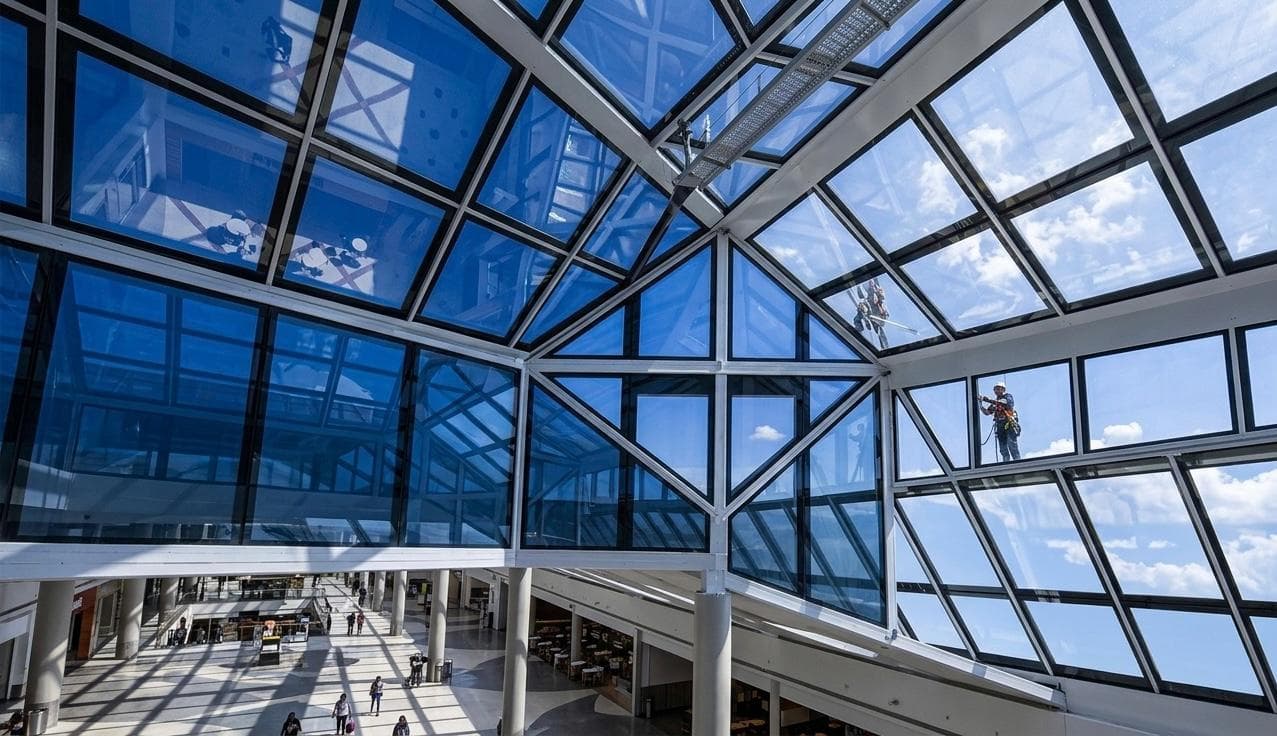
Key Highlights
• ClearVue selected for Canva’s new Sydney headquarters project in Surry Hills
• Expected project value sits at approximately A$600,000
• Installation spans 660m² across solar glazing, skylights, and balustrades
• Building-integrated solar system expected to generate at least 88,000kWh annually
• Formal subcontract anticipated within 14 days following non-binding LOI
A glass panel on a Sydney office tower rarely moves an ASX stock.
This week, it did.
Market Snapshot
ClearVue Technologies (ASX: CPV) climbed 14.29% on Thursday after confirming it had received a non-binding Letter of Intent to supply its solar glazing technology for Canva’s new headquarters in Surry Hills.
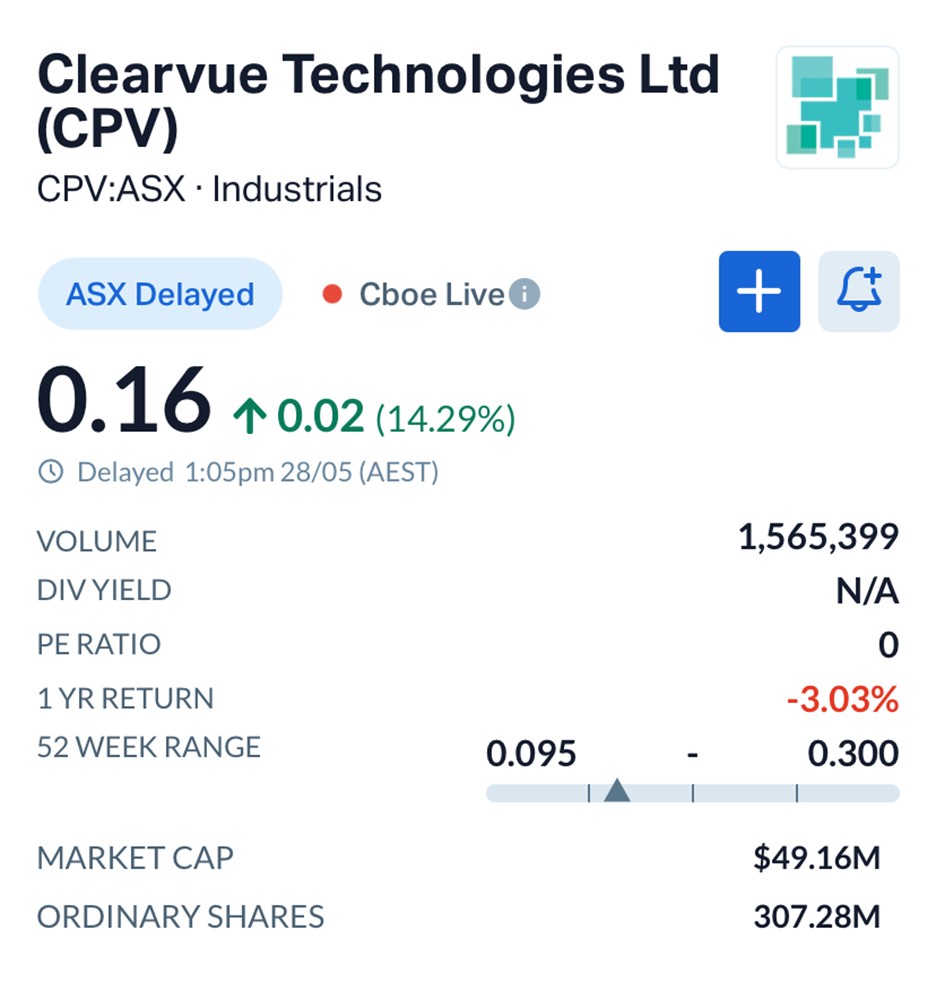
Source: MarketIndex
The expected project value sits at around A$600,000, with delivery scheduled over roughly 180 days once the final subcontract is executed.
The agreement arrived quietly, though the significance sits well beyond the dollar figure itself.
For emerging clean technology companies, the hardest commercial hurdle is rarely the laboratory. It is securing approval inside high-occupancy commercial buildings where engineering standards, waterproofing requirements, thermal performance and long-term durability face close regulatory scrutiny.
ClearVue’s technology has now been selected for one of Australia’s highest-profile corporate office developments.
The project covers around 660 square metres of building-integrated photovoltaic systems across solar balustrades, rooftop glazing and skylight infrastructure. In total, 310 solar panels are expected to generate a minimum of 88,000 kilowatt-hours annually from roughly 75kW of installed capacity.
Infinity Construction Group selected the company as part of Canva’s Sydney headquarters development.
The installation itself is unusually technical.
The solar balustrade system is being designed around concealed electrical infrastructure and strict waterproofing requirements inside landscaped communal areas. The rooftop skylights must also remain trafficable for maintenance access while reducing infrared heat transmission by approximately 80%.
Urban heat has become another focus point in modern commercial architecture, particularly across dense CBD precincts. ClearVue said the rooftop system will integrate planter boxes and thermal management technology designed to reduce heat absorption across the building envelope.
The timing reflects broader pressure building across commercial property markets.
Large office developments are increasingly being designed around stricter environmental performance ratings as tenants, financiers and regulators push toward lower-emission assets. Traditional rooftop solar often struggles to generate enough energy for large multi-storey commercial buildings, forcing developers to turn facades, windows and structural glass into additional power-producing surfaces.
The Canva project is targeting performance above a 5-Star NABERS rating, Australia’s benchmark system for measuring environmental efficiency in commercial buildings.
ClearVue’s latest announcement also continues an unusually active month for the small-cap company.
Last week, the company secured a A$305,000 retrofit contract for the Rio Business Centre in Cyprus. Days later, ClearVue announced a manufacturing and distribution partnership with India’s Aria Glass Industries tied to a US$240.5 million glass facility.
The Indian agreement introduced a royalty model that could eventually see ClearVue earn US$2 per square metre of manufactured product.
Stay ahead of the market
The most important stories, delivered to your inbox. No noise, just what matters.
By subscribing, you agree to our Privacy Policy.
Taken together, the recent announcements show a company trying to solve two different commercial problems at once.
One side of the strategy focuses on high-profile demonstration projects capable of validating the technology in live commercial environments. The other leans toward scaling manufacturing partnerships internationally where production volumes become materially larger.
The Canva headquarters now becomes an important operational test.
Unlike controlled pilot installations, this project combines multiple product categories, customised engineering and active construction timelines inside a major corporate development. Execution risk still remains.
The current agreement is non-binding, with final terms expected to be completed within 14 days. Investors will likely watch closely for confirmation that the formal subcontract proceeds without material changes.
Supply chain coordination and installation complexity also become more visible once physical delivery begins.
For now, though, ClearVue has moved into a different conversation.
The market is no longer assessing whether the technology works inside controlled demonstrations.
It is now watching whether the company can repeatedly deliver it at commercial scale.
What is your take on this story?
This is user sentiment & not financial advice.
Disclaimer - Skrill Network is designed solely for educational and informational use. The content on this website should not be considered as investment advice or a directive. Before making any investment choices, it is crucial to carry out your own research, taking into account your individual investment objectives and personal situation. If you're considering investment decisions influenced by the information on this website, you should either seek independent financial counsel from a qualified expert or independently verify and research the information.